
Strong data and digital systems require a security foundation to build trust, safety and resilience. A coordinated approach to delivering on the Government’s cyber security, data and digital agenda and capabilities further strengthens security and reliability of critical services and systems for people and business.
Australia’s cyber, data and digital capabilities are being integrated to ensure public systems are secure. This will ensure that Australians can interact with government safely and confidently, protected from cyber threats and confident sensitive data is protected.
Delivering world leading cyber protections
Resilience is a core foundation of the Government's broader digital and data ambitions. The 2023- 2030 Cyber Security Strategy(Opens in a new tab/window) aligns with the Data and Digital Government Strategy to improve the security of data and digital capabilities, backed by strong cyber security protections.
Progress under the Strategy leverages the digital investment process, working with agencies to ensure cyber security policy settings are applied across all government entities to protect government services. The focus to date has been on strengthening Australia’s cyber security foundations and addressing the critical gaps in Australia’s cyber shields through deep partnerships across industry and government.
Over the next year, the Government’s work under the 2023-2030 Cyber Security Strategy will focus on reducing cyber risks and strengthening Australia's systems. This means ensuring public digital infrastructure is secure and resilient to global shocks and evolving threats. Cyber security in Australia will be strengthened by enhancing risk monitoring, investing in stronger protection mechanisms, setting clear priorities and taking targeted action where it is needed most. By using legal powers and consistent standards, the Government will enhance security across government platforms so people and business can trust their services remain protected.
The Government is ensuring people and business have the tools to proactively reduce their own risk of taxation fraud. The ATO is enhancing its app to enable taxpayers to detect and prevent fraud, without needing to liaise with its staff. The app provides real-time security messages regarding key account changes, alerting users immediately to any unrecognised transactions and allowing them to lock their account if suspicious activity is detected.
The Government’s integrated approach will ensure Australia’s digital systems are resilient and adaptable. Embedding security throughout digital government builds the foundations for more secure public services.
Spotlight: Protecting people and business from scams
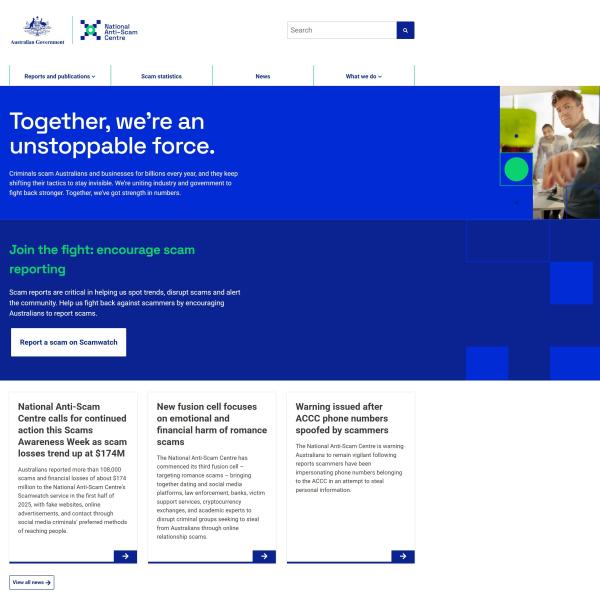
In the last year, the Government has safeguarded people and business from scams by introducing world leading scam prevention under the Scams Prevention Framework(Opens in a new tab/window) and the National Anti-Scam Centre(Opens in a new tab/window).
Through strong collaboration and data sharing, these two initiatives are strengthening anti-scam collaboration between law enforcement, government and industry.
In 2024, the National Anti-Scam Centre referred more than 8,000 websites for takedown, saving an estimated $36 million in losses and safeguarding consumers from scams.
Learn more about the National Anti-Scam Centre(Opens in a new tab/window)
Delivering secure and protective digital services
Australians expect government services to be secure and protect their personal information. To meet this expectation, the Government is embedding trust and resilience into the core of digital service delivery, ensuring people and business can engage confidently with government digital services.
Protecting personal information and enforcing privacy rights is central to building public trust. Privacy laws have been amended to introduce tougher penalties, enable more proactive regulation, and provide redress for people impacted by substantial privacy harms. The Government is prioritising protection of personal information, having funded the Office of the Australian Information Commissioner(Opens in a new tab/window) to establish a standalone Privacy Commissioner in 2024. This new funding also supported enhanced privacy enforcement action, and to encourage and support organisations to adopt better information security practices.
Over the next year, the Office of the Australian Information Commissioner’s refreshed privacy regulatory priorities and intelligence-driven approaches will ensure regulated entities protect people’s personal information. Privacy will be prioritised by holding organisations accountable for data breaches and striving to achieve outcomes for Australians impacted by substantial privacy harms.
New platforms will ensure data held about people engaging with government services is managed responsibly and used ethically. Services Australia will undertake a multi-year process to implement a new data governance and management platform, designed to identify and protect high risk information such as financial and health data. This system will also enhance oversight of staff access to personal information, improving transparency and safeguarding against the misuse of data.
These efforts are underpinned by world-class cyber security practices to ensure systems are resilient to threats and trusted by the public. Quantum-safe encryption is being piloted in Services Australia’s platforms over the coming year to help safeguard personal information from emerging cyber threats and advanced computing technologies. Together, these programs are building a digital government that protects people, empowers business, and earns public trust.

of people reported being satisfied with government services.
As more services move online, the Government’s strong approach to cyber security is maintaining people’s trust in the services being delivered.
Source: Survey of Trust in Australian public services
Future-ready digital government
The Government is laying the foundations for a future-ready public service, focusing on people capability, digital maturity, investment planning and procurement reform as key drivers for a modern digital government.
Modernising the Government’s systems and services relies on a skilled workforce that can move from cyber awareness to cyber understanding. The APS Data, Digital and Cyber Workforce Plan details how the Government is developing the skills and capabilities needed to harness emerging technologies like AI while safeguarding against potential risks.
Significant steps are also being made to improve digital maturity of government agencies through the development of a Digital Maturity Assessment. Currently being trialled across Government to ensure it supports agencies while avoiding unnecessary administrative burden, the Digital Maturity Assessment will provide agencies with a mechanism to measure their digital maturity and capability, highlight areas for further investment and show improvement over time.
Improving digital investment planning will build a future-ready government by improving planning and delivery confidence for government digital projects. The DTA has improved Digital Investment Plans(Opens in a new tab/window) to align investment with government priorities, agency strategic priorities and the Strategy’s 2030 vision. Agencies must plan strategically across short, medium and long-term horizons, creating a consistent approach to digital investment planning for better investment outcomes. The Digital Investment Plan website is now live on digital.gov.au(Opens in a new tab/window), bringing together key resources in one place.
The Government is making it easier for business to engage with government procurement processes, ensuring agencies can rapidly engage new sellers in response to emerging needs. The Digital Marketplace Panel 2(Opens in a new tab/window), released in October 2024, consolidates existing panels to make is easier for the digital industry to bid for opportunities through BuyICT.gov.au(Opens in a new tab/window), streamlining the procurement process for buyers and sellers. It will soon consolidate the software and cloud marketplaces, aiming to provide a unified procurement pathway for software-as-a-service and commercial-off-the-shelf software products.
The Government will harness its market influence to ensure Australians receive top-quality services by strategically utilising offerings from ICT providers. To maintain excellence in digital service delivery — especially as artificial intelligence becomes more prominent — the Government will make full use of its collective purchasing power and capabilities across all agencies.
Reforming legacy systems ensures government’s digital systems are secure, resilient and aligned with emerging needs. Over the past year, the Take Farmers to Markets Program(Opens in a new tab/window) has stabilised, secured and modernised the ICT platforms that underpin Australia’s export services, reducing the risk of systems unavailability. This included significant cybersecurity uplift, the wholesale adoption of cloud technology and the movement of existing systems onto modern, reliable platforms.
Modernising legacy systems enables people and business to engage with government digital services with confidence. In 2023, Treasury released a Strategic Plan for Australia’s Payment Systems(Opens in a new tab/window) to ensure they reflect the way Australians make and receive payments. Services Australia will work with Treasury, other government agencies and the financial industry to decommission out-of-date payment services in favour of adopting emerging technologies and new digital standards to improve payment interoperability and payment security.
These reforms pave the way for a future-focused, modern digital government with world-class, modern data and digital capabilities, now and into the future.