Data is created whenever Government interacts with people, business and its stakeholders.
The Government already uses the data it collects to improve services, boost productivity, and make smarter and faster decisions that deliver real benefits for people. However, there is more that can be done to get the full value out of the data Government holds.
Building data foundations
The Government has taken important steps to realise the Strategy’s vision for data use, and build strong data foundations. Effective data governance, enhanced data maturity, and fit for purpose legislation are essential to driving better outcomes for people and business.
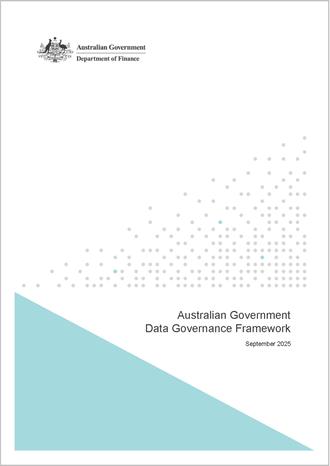
In September 2025, the Government published the Australian Government Data Governance Framework(Opens in a new tab/window) to support consistent, secure and ethical management of public data across government agencies. It sets out best practices for data stewardship, access, privacy, and quality. Adherence to the framework supports agencies to streamline data processes and leverage data for innovative policy development and service delivery. For the broader public, the framework supports trust in government management of data, with the promise of more responsive, data-driven services to address community needs.
The Government is committed to measuring its data maturity progress to ensure agencies are keeping data secure, improving services and protecting personal information. The Data Maturity Assessment Tool(Opens in a new tab/window) introduced in 2024, provides a structured, consistent approach to evaluating the strengths and gaps in each agency’s data practices, and enables leaders to pinpoint specific areas where further investment or strategic focus can yield valuable improvements. APS-wide assessments will be undertaken every 2 years. Agencies may identify the need to strengthen data governance, enhance data quality assurance processes, improve privacy and security protocols, or develop better data cataloguing and sharing mechanisms.

Improving lives through better use of data
Data enables deeper understanding of people’s needs and helps improve essential services, including in health, ageing and disability. Advanced uses of data can help illuminate people’s diverse experiences and gaps in access and outcomes, supporting greater service inclusivity, efficiency and responsiveness.
Initiatives like the National Health Data Hub(Opens in a new tab/window) are supporting contemporary medical research to inform health, welfare, disability and aged care services planning, monitoring and policy development by government and non-government researchers. It brings together hospital, emergency and outpatient data from participating state and territory health authorities.
Approved researchers will be able to access the de-identified integrated data to create new insights into the health and wellbeing outcomes of Australians.

Other health data linkages have also improved the lives of everyday Australians, such as the one-off linkage of the New South Wales Cancer Registry with the Person Level Integrated Data Asset (PLIDA)(Opens in a new tab/window), which enabled researchers to estimate the likelihood of being diagnosed with lung cancer by socio-demographic characteristics.
PLIDA is supporting policy and program delivery, research and evaluation for a range of government, academic and policy research initiatives.
It is continuously expanding to grow the evidence base available to approved researchers, bringing data together on health, education, government payments, income and taxation, employment, and population demographics (including the Census) over time. PLIDA enables new whole-of-life insights about various population groups in Australia, such as the interactions between their characteristics, use of services like healthcare and education, and outcomes like improved health and employment.
Spotlight: Ensuring data sharing legislation is fit for purpose
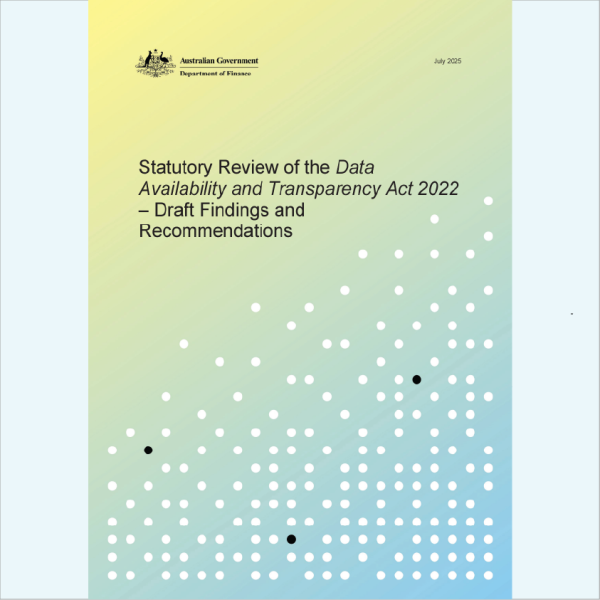
The Government is committed to ensuring that legislative frameworks and safeguards are aligned with changing technologies and community expectations. In 2025, an independent review of the Data Availability and Transparency Act 2022 (DAT Act)(Opens in a new tab/window) commenced to assess the Act’s effectiveness in providing a secure and ethical framework for data sharing within government and with trusted partners.
Facilitating safer and more efficient data sharing enhances research capabilities, informs evidence-based public policy, and fosters collaboration with industry.
The review process has included comprehensive stakeholder engagement, gathering feedback from privacy experts, industry leaders, and the broader community to identify opportunities to strengthen the DAT Act’s effectiveness and responsiveness.
The Government will maintain a careful balance between safeguarding personal information and better enabling data availability to deliver tangible benefits to Australians.
The recent delivery of the Australian National Data Integration Infrastructure(Opens in a new tab/window) enables scalable and secure data integration across Australian Government agencies as well as state and territory governments, providing the capacity to safely and securely grow the evidence base available to approved researchers.
This infrastructure will enable the Government to support the National Disability Data Asset(Opens in a new tab/window) to provide a more complete picture of the life experiences of people with disabilities, which in turn will inform improved support and services for people with disabilities, their carers and families. This holistic approach will allow the Government to identify gaps, target resources more effectively, and track and improve service effectiveness.
Integrated data has also improved health outcomes. Linking the Pharmaceutical Benefits Scheme(Opens in a new tab/window) with PLIDA (Opens in a new tab/window)identified five previously unrecognised medicines associated with heart failure, leading to regulatory action.
During the pandemic, COVID-19 vaccination data was linked with demographic information from PLIDA to pinpoint communities with low immunisation uptake, enabling targeted communications and higher coverage.
Real-time sharing of higher education enrolment data with Services Australia has saved students an estimated $40 million annually by preventing ineligible debts from accruing.
The Department of Education and the Australian Bureau of Statistics used integrated data to develop a fairer way of allocating non-government school funding.
By linking family income data, the Government now bases school funding on the actual median income of families at each school, shaping the distribution of around $18 billion annually. Data integration isn’t about adding complexity, but about making policies simpler and fairer.
These examples show that safe data integration is being leveraged to change lives, improve fairness, and boost efficiency
Using data to support Australian businesses
Better use of government data benefits Australian businesses by revealing market trends, supply chain issues, and economic shifts, helping to target support more effectively.
By linking data on housing, business ownership and superannuation through the Wealth and Housing Assets Module, the Government is gaining insights into current and emerging challenges associated with business formation and development, cost of living, housing affordability and migration.
The Government’s Business Longitudinal Data Analysis Environment(Opens in a new tab/window) is supporting a range of new research analysing the Indigenous business sector. This includes the Australian Trade and Investment Commission and Department of Foreign Affairs and Trade landmark study on the experiences of First Nations businesses succeeding internationally in trade and tourism.
A collaboration between the Australian Bureau of Statistics and the University of Melbourne’s Indigenous Economic Power Project is also underway to develop a comprehensive dataset for analysing the entrepreneurial activities and economic impact of the Indigenous business sector. These studies will guide shared decision-making for the benefit of Aboriginal and Torres Strait Islander people and businesses.
Data is being used to help businesses via business. gov.au(Opens in a new tab/window), which analyses user data and feedback to inform enhancements that save businesses time and money.
The data-driven tools and enhancements delivered through business.gov.au are estimated to collectively save $88 million and 480,000 hours for businesses each year.
Spotlight: Using data and AI to secure Australia’s supply chains
Using data analytics and AI to identify risks and opportunities in complex supply chains is vital to Australia's national and economic security.
The Department of Industry, Science and Resources is developing the Industry and Supply Chain Intelligence Platform, which integrates diverse data sources and uses advanced data tools to improve visibility of critical supply chain risks.
This supports daily business operations as well as response to emergencies, such as COVID and bushfires, which significantly impact supply chains and consumer access to essential goods.
In 2026, the platform will be used to undertake multi-tier supply chain mapping to inform industry and supply chain policy and the Government’s broader Future Made in Australia(Opens in a new tab/window) agenda.

Data delivering better outcomes for people where they live and work
Data that includes links to locations is crucial in helping inform planning and place-based initiatives and considers on-the-ground geographical realities and differences between communities across Australia. By linking information to specific places — such as addresses, postcodes, and local government areas — the Government, individuals and organisations can identify patterns about population, service accessibility, and local requirements.
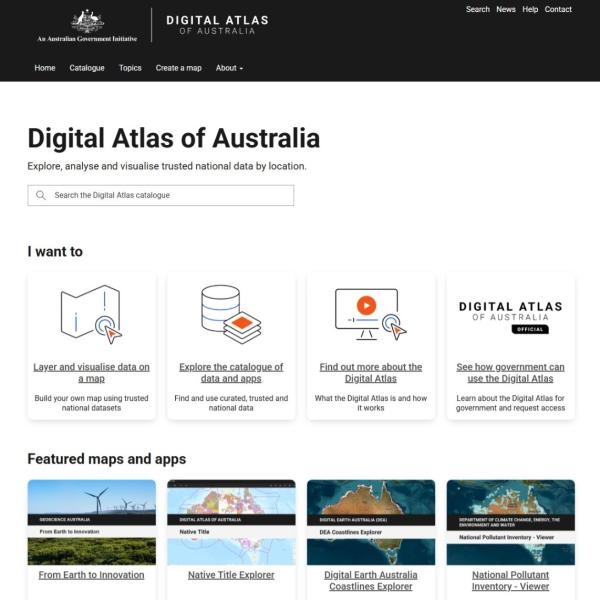
Several recent government initiatives have focused on improving the use of geospatial data and expanding public access through interactive mapping tools. The Digital Atlas(Opens in a new tab/window) of Australia is a national geospatial capability that provides centralised access to over 330 curated, trusted national datasets from 15 government agencies. Users can explore and visualise data on Australia’s geography, people, economy and the environment by location through user-friendly maps and applications.
The Digital Atlas is a way to discover patterns and trends — such as where services might be needed most, how populations are shifting, or the environmental challenges that exist in a particular region. It supports better decision-making by offering reliable, up-to-date information that can be used for everything from emergency response to long-term infrastructure projects. Importantly, the Digital Atlas is designed so that anyone can use it, not just technical experts.
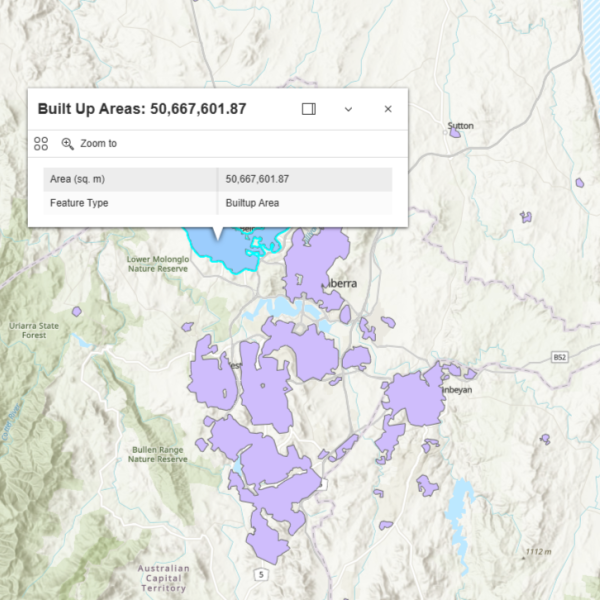
Curated geo-spatial data sets from 15 agencies now available on the Digital Atlas.
Source: Digital Atlas
Data current as at 24 July 2025
Location data is being used to support disaster relief services. The National Emergency Management Agency (Opens in a new tab/window)is developing a National Messaging System(Opens in a new tab/window), to enhance the delivery of public safety and emergency messaging. Utilising cell broadcast technology and leveraging geospatial data and mapping solutions, the National Messaging System will send targeted alerts to any area in the country that has cell coverage.
The National Messaging System will enable Australian Government and state and territory emergency services to efficiently distribute public information and warnings to the community, limiting the loss of property and life in disaster events.
The National Messaging System will be fully operational prior to the 2026-27 higher risk weather season.
Spotlight: Digital Atlas
An AI Assistant to make location data even more accessible
An AI Assistant addition to the Digital Atlas, being tested on the platform, allows users to type plain language questions, like “show me all the ambulance stations in Adelaide,” and quickly get mapped results. This makes exploring the data even more accessible, helping people find what they need without complicated searches or specialist knowledge.
Read more about the Digital Atlas(Opens in a new tab/window)